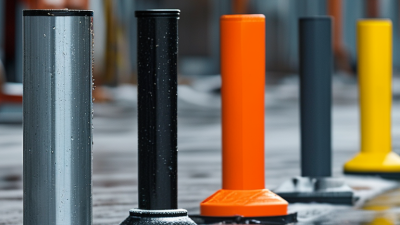
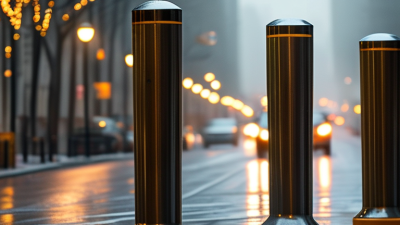
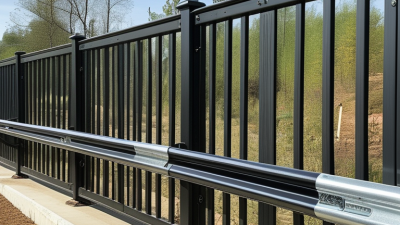
Choosing the right Pole Bollards is not simply a matter of comparing height, diameter, or price. Global buyers must examine impact resistance, steel grade, anchoring depth, corrosion protection, visibility, maintenance access, and installation conditions. A bollard beside a busy airport entrance faces different demands from one protecting a hotel walkway or warehouse gate. Small details matter. So does the ground beneath it.
Bruce Schneier, a respected security technologist, said, “Security is a process, not a product.” That principle also applies to Pole Bollards. A strong unit may fail when installed in weak concrete, positioned too far from the protected façade, or selected without considering vehicle approach angles. This guide compares ten leading options through practical and technical criteria, including performance evidence, material quality, certification claims, replacement costs, and supplier support. It also considers weather exposure, pedestrian safety, and long-term appearance.
No shortlist is perfect. Product data can be incomplete, and marketing language sometimes sounds stronger than the test evidence. Buyers should verify load ratings, test methods, warranty terms, and local installation requirements before ordering. The best choice is rarely the cheapest option. It is the bollard that matches the site, risk level, budget, and maintenance capacity. Expect useful comparisons, but question every impressive number. A careful decision protects people, property, and future operating costs.
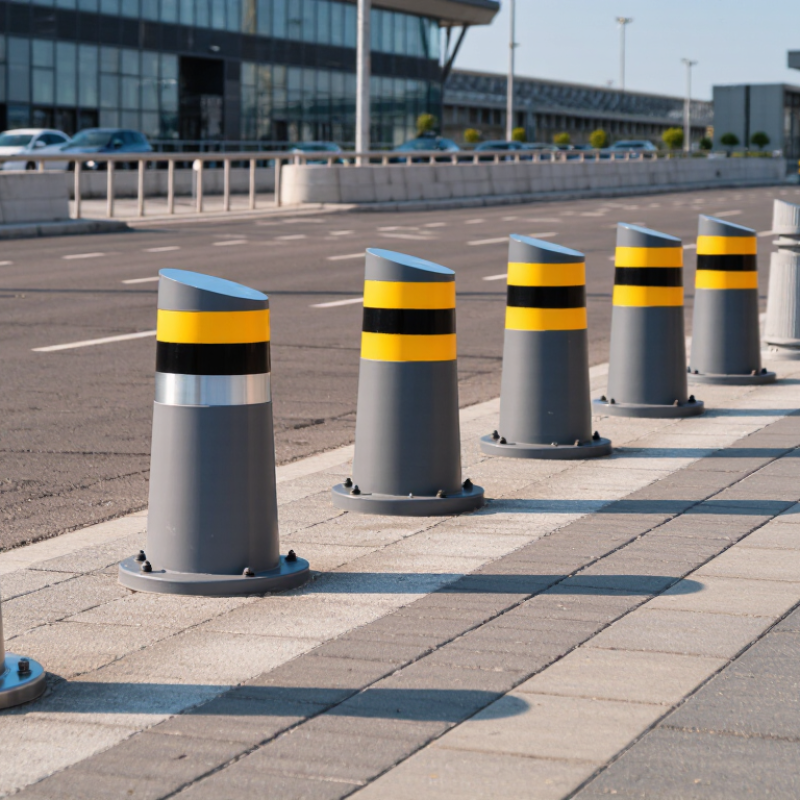
Pole bollards serve different security roles, so global buyers should compare more than appearance. Fixed steel bollards create a permanent barrier around entrances, loading bays, and public buildings. Their deep foundations resist vehicle pressure, but installation can disrupt finished paving. Removable bollards offer controlled access for emergency or maintenance vehicles. They work well in pedestrian streets, although storage and replacement procedures need clear planning.
Retractable and automatic bollards support busy sites with changing access needs. They can protect hotel drives, government facilities, and logistics entrances without blocking daily traffic. Flexible polymer bollards guide vehicles and mark hazards, but they are not designed for serious impact protection. Decorative cast or stainless-steel models improve streetscape design while defining safe pedestrian zones. Some buyers choose appearance too quickly. That assumption is often wrong.
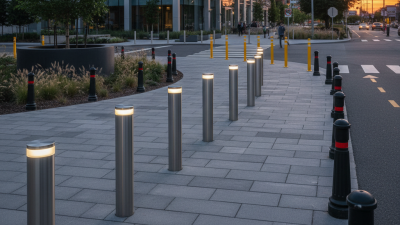
Security performance depends on soil, spacing, foundation depth, drainage, visibility, and local safety requirements. A short bollard may protect a doorway, while a taller model improves driver awareness near a crowded plaza. Reflective bands help at night. Rounded tops reduce snagging risks in pedestrian areas. Solar lighting can improve visibility, but batteries may weaken in cold or shaded locations. Impact-tested products require verified data, not vague sales claims. Buyers should request material grades, maintenance intervals, installation drawings, and replacement-part availability. A practical site assessment may reveal that fewer, stronger bollards work better than many decorative units.
When global buyers compare pole bollards, impact ratings deserve more attention than appearance or diameter. ASTM F2656 measures a vehicle test at a stated speed and records vehicle penetration. Ratings such as M30 or M50 indicate tested impact conditions, not universal protection. The number alone can mislead.
PAS 68 reports a detailed test result, including vehicle type, impact speed, approach angle, and penetration distance. IWA 14-1 also uses vehicle class, speed, angle, and penetration, but its reporting framework differs. Not interchangeable. A bollard tested at 50 mph with a heavy truck faces a different challenge from one tested with a passenger car at 30 mph. Check the original laboratory report.
Experienced specifiers also inspect the foundation, spacing, anchoring, soil conditions, and replacement plan. A strong steel post can underperform when its concrete base is shallow or poorly cured. Ask whether the result applies to fixed, removable, or retractable installation. Maintenance matters too. Damaged mechanisms may not lock correctly. A common review error is focusing on the post while ignoring the ground beneath it. For a fair top-ten comparison, record the standard, vehicle, speed, angle, penetration, installation method, and test date for every model. Leave room for uncertainty. Site conditions rarely match the test yard perfectly.
Reference impact-energy comparison for ASTM F2656, PAS 68, and IWA 14-1 test profiles.
How to read this chart: Impact energy is calculated from vehicle mass and test speed using E = ½mv². ASTM F2656 commonly identifies impact speed with M30, M40, or M50 and reports vehicle penetration separately through P-ratings. PAS 68 and IWA 14-1 describe the tested vehicle, speed, impact angle, and penetration distance.
These energy values are reference comparison scenarios, not product certifications. Ratings from ASTM F2656, PAS 68, and IWA 14-1 are not directly interchangeable; buyers should verify the complete test report, vehicle class, speed, penetration result, foundation design, and installation conditions.
Top 10 Pole Bollards for Global Buyers to Compare
When comparing pole bollards, start with material, not appearance. Stainless steel resists corrosion in coastal locations, while galvanized carbon steel often offers strong value. Ductile iron suits heavy-duty applications, but it can require careful coating maintenance. Check the grade, wall thickness, weld quality, and surface treatment. A polished finish may hide weak construction.
Height and diameter affect visibility, impact resistance, and pedestrian clearance. Common above-ground heights range from 600 to 1,200 millimeters. Diameters often range from 100 to 300 millimeters. However, larger does not always mean safer. Load data must identify static load, impact energy, vehicle speed, and test direction. Foundation depth matters too. A strong post with a shallow base may fail early. I have seen specification sheets omit this detail, which makes comparison unreliable.
Tips: Request a complete technical drawing. Confirm above-ground height, total length, steel grade, and base dimensions. Ask whether the load rating comes from testing or calculation. Check the test standard and installation surface. For coastal projects, request salt-spray or corrosion data. For removable models, inspect locking parts and drainage. Packaging also matters; damaged coatings can create early rust. Compare warranty terms carefully, but do not treat warranty length as proof of performance. A longer warranty cannot correct poor anchoring. If data is missing, mark it as unverified rather than guessing.
| No. | Bollard Type | Primary Material | Finish / Protection | Overall Height | Outside Diameter | Wall Thickness | Base / Installation | Approx. Weight | Reference Lateral Design Load | Typical Use |
|---|---|---|---|---|---|---|---|---|---|---|
| 1 | Heavy-Duty Fixed Steel Pole Bollard | Structural carbon steel tube, ASTM A500 Grade B or equivalent | Hot-dip galvanized; optional powder-coated finish | 1,000 mm | 219 mm | 10 mm | Welded base plate; cast-in or chemical anchors | Approx. 78 kg | 30 kN at 500 mm | Warehouse entrances, loading areas, industrial buildings |
| 2 | High-Security Fixed Steel Pole Bollard | Structural carbon steel tube, ASTM A500 Grade B or equivalent | Hot-dip galvanized with protective topcoat | 1,200 mm | 273 mm | 12 mm | Deep-set concrete foundation with reinforced base collar | Approx. 119 kg | 50 kN at 600 mm | Perimeter protection, utility facilities, restricted sites |
| 3 | Standard Fixed Steel Protection Bollard | Carbon steel tube, ASTM A500 Grade B or equivalent | Hot-dip galvanized or zinc-rich primer with powder coating | 900 mm | 168 mm | 6.3 mm | Base plate with four anchor bolts | Approx. 39 kg | 15 kN at 450 mm | Retail fronts, car parks, pedestrian protection zones |
| 4 | Removable Steel Pole Bollard | Carbon steel tube, ASTM A500 Grade B or equivalent | Hot-dip galvanized; removable sleeve with drainage provision | 900 mm | 114 mm | 4.5 mm | Ground socket set in concrete; locking pin or padlock | Approx. 18 kg | 8 kN at 450 mm | Temporary access control, service lanes, event areas |
| 5 | Telescopic Retractable Steel Bollard | Stainless steel 304 or galvanized carbon steel | Brushed stainless finish or powder-coated galvanized finish | 700 mm raised | 114 mm | 4 mm | Below-ground sleeve; manual locking mechanism | Approx. 32 kg | 6 kN at 350 mm | Driveways, residential access, service entrances |
| 6 | Stainless Steel Architectural Pole Bollard | AISI 304 stainless steel; AISI 316 for coastal exposure | Brushed, satin, or mirror-polished surface | 900 mm | 101.6 mm | 3 mm | Concealed base plate or core-drilled installation | Approx. 17 kg | 5 kN at 450 mm | Hotels, offices, plazas, landscape and architectural projects |
| 7 | Flexible Impact-Absorbing Pole Bollard | UV-stabilized polyurethane elastomer with steel mounting core | Integral color; UV and weather resistant | 1,000 mm | 100 mm | Not applicable | Surface-mounted base or embedded anchor socket | Approx. 9 kg | 1.5 kN reversible deflection load | Traffic channels, cycleways, car parks and low-speed roads |
| 8 | Recycled Polymer Traffic Pole Bollard | Recycled HDPE or recycled polyethylene compound | UV-stabilized molded body; high-visibility reflective bands | 1,000 mm | 80 mm | Solid molded section | Surface-mounted base or weighted portable base | Approx. 6 kg | 0.8 kN reversible deflection load | Temporary traffic management, pedestrian routes, work zones |
| 9 | Ductile-Iron Decorative Pole Bollard | Ductile iron, EN 1563 grade EN-GJS-400-15 or equivalent | Exterior-grade coating system over corrosion-resistant primer | 900 mm | 140 mm maximum | Cast section; variable wall profile | Flanged base with anchor bolts or buried base | Approx. 42 kg | 10 kN at 450 mm | Heritage areas, streetscapes, parks and public squares |
| 10 | Lightweight Aluminum Pole Bollard | Aluminum alloy 6061-T6 or 6063-T6 | Anodized or polyester powder-coated surface | 900 mm | 114 mm | 5 mm | Surface-mounted base plate with stainless anchors | Approx. 12 kg | 3 kN at 450 mm | Indoor facilities, covered walkways, low-impact pedestrian areas |
Note: The dimensions and load figures are representative engineering reference values for comparison, not universal product ratings. Actual capacity depends on steel grade, weld quality, foundation design, anchor configuration, impact speed, load direction, corrosion allowance, and local design standards. Crash-rated applications should be verified against the applicable test standard and a project-specific structural calculation.
For a ten-product bollard comparison, global buyers should examine installation depth before appearance. A fixed steel bollard may need a deep reinforced concrete socket, while a removable model often uses a shorter sleeve and locking cover. Soil conditions matter. Loose fill, clay, groundwater, and frost can change foundation performance.
A neat depth rule is tempting, but it is often wrong. Engineers should check vehicle speed, impact rating, bollard height, spacing, and local wind loads. EN 1997-1 supports site-specific geotechnical design, while impact-rated products should follow recognized testing standards, such as ASTM F3016 or PAS 68 where applicable. A small foundation can fail when concrete cracks or reinforcement is poorly placed. That detail is easy to underestimate.
Accessibility also requires measured planning. The U.S. Access Board’s ADA Standards generally require an accessible route at least 36 inches wide. Bollards placed beside gates, ramps, or crossing points must preserve clear passage and avoid dangerous protrusions. The World Health Organization’s Global Status Report on Road Safety 2023 reports approximately 1.19 million annual road deaths, highlighting the need for visible, predictable roadside protection. Contrast bands, reflective surfaces, and controlled spacing improve recognition, but glare can create new problems. Buyers should request foundation drawings, tested impact evidence, corrosion data, and maintenance intervals. Installation quality remains the weak link.
A global buyer’s matrix should compare the top 10 pole bollards beyond price and appearance. I examine steel grade, wall thickness, impact resistance, visibility, anchoring, drainage, and maintenance access. These details often decide performance after installation. A sample bollard may look strong, yet its base plate can reveal weak design.
For coastal sites, corrosion protection deserves a separate column. Record coating type, salt-spray evidence, weld quality, and replacement options. For crowded loading areas, compare diameter, height, reflective markings, and vehicle contact zones.
Removable models can simplify access control, while fixed models often offer stronger site protection. Check installation depth and foundation requirements before comparing quotations.
I also score documentation. Test reports, material certificates, installation drawings, and maintenance instructions should be available and internally consistent. Claims need verification. A clear warranty helps, but it cannot replace engineering evidence. My first comparison sheet focused too heavily on impact ratings. That was a mistake. Delivery time, spare parts, local installers, and surface repair can affect the real lifecycle cost more than a higher laboratory result. Use weighted scores, but leave room for site judgment. Soil conditions, drainage, and pedestrian movement may change the ranking. No single bollard wins every location.