| By Function |
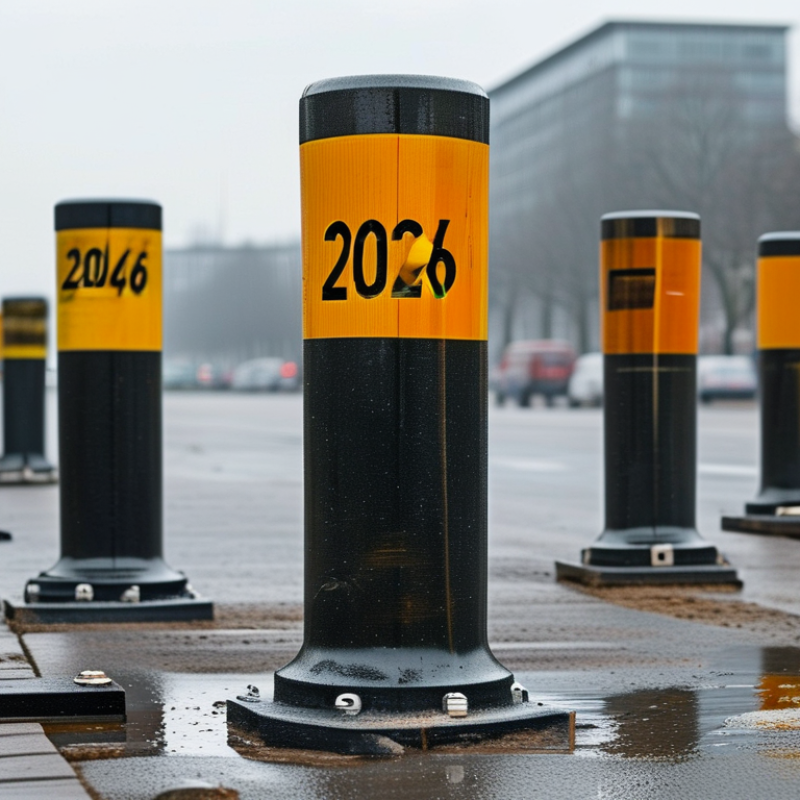
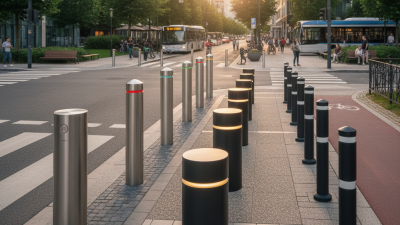
Fixed Security Bollard |
Provides a permanent physical barrier against unauthorized vehicle access. |
Usually made from galvanized or stainless steel tubes, often with a concrete-filled steel core. Decorative covers may be added. |
Approximately 600–1,200 mm above ground; commonly 100–273 mm in diameter. |
Rigid and non-yielding. The actual resistance level depends on the steel grade, wall thickness, foundation, spacing, and tested system design. |
Reflective bands, high-visibility powder coating, contrasting colors, or optional LED markers. |
Core-drilled or set into a reinforced concrete foundation with anchoring or embedded steel components. |
Building fronts, public spaces, loading areas, pedestrian zones, and restricted-access roads. |
Confirm vehicle-threat requirements, foundation details, local approval rules, corrosion protection, and maintenance access before purchase. |
| By Function |
Flexible Impact-Absorbing Bollard |
Improves lane guidance and roadside visibility while reducing damage during low-speed contact. |
Typically manufactured from UV-stabilized polyurethane, elastomer, or flexible recycled polymer with a steel or composite fixing base. |
Approximately 450–1,000 mm above ground; commonly 80–150 mm in diameter. |
Designed to bend, deflect, or return toward its original position after minor impacts. It is not normally a vehicle-stopping security barrier. |
Wide reflective bands, fluorescent colors, molded-in reflectors, and optional warning lamps. |
Surface-mounted with bolts, socket-mounted, or fixed to a prepared pavement base. |
Traffic islands, parking areas, cycle lanes, temporary channelization, and low-speed access roads. |
Check rebound performance, UV resistance, temperature range, replacement parts, and compatibility with snowplows or street-cleaning equipment. |
| By Function |
Removable or Socketed Bollard |
Controls vehicle access while allowing authorized users to remove the post when a route must be opened. |
Steel, stainless steel, or aluminum post installed in a permanent ground socket; some designs include a locking pin or padlock housing. |
Approximately 600–1,000 mm above ground; commonly 60–150 mm in diameter. |
Normally rigid when locked in position. Performance depends on the post, socket, locking mechanism, and foundation. |
Reflective strips, contrasting paint, or optional illuminated caps. |
Permanent socket embedded in concrete; the bollard can be lifted out and stored when access is required. |
Seasonal roads, event areas, emergency access lanes, private driveways, and pedestrian streets. |
Evaluate lifting weight, socket drainage, locking security, corrosion resistance, storage requirements, and ease of operation. |
| By Function |
Retractable Automatic Bollard |
Provides controlled vehicle access through remote, timed, card-based, or integrated access-control operation. |
Usually consists of a stainless or galvanized steel cylinder, underground housing, hydraulic or electromechanical drive, and control cabinet. |
Approximately 500–800 mm extended height; commonly 200–275 mm in diameter. |
Available in standard traffic-control versions and tested high-security versions. Not every automatic bollard is designed to stop a hostile vehicle. |
Reflective bands, illuminated rings, LED caps, audible warning devices, and traffic signals may be available. |
Requires an underground pit, drainage system, electrical supply, control wiring, and accessible maintenance points. |
Government facilities, commercial entrances, controlled urban streets, parking access points, and security perimeters. |
Review power failure behavior, drainage, cycle frequency, emergency override, operating temperature, spare parts, and integration with access-control systems. |
| By Function |
Telescopic or Manual Retractable Bollard |
Offers lower-cost access control where the post is manually raised or lowered. |
Nested steel sections or a removable inner post, usually with a lock, handle, spring assist, or gas strut. |
Approximately 500–900 mm extended height; commonly 80–150 mm in diameter. |
Rigid while extended, but generally intended for access management rather than certified high-energy vehicle impact protection. |
Reflective bands, painted finishes, and optional solar or battery-powered markers. |
Surface-mounted or installed in a ground sleeve with a drainage provision. |
Residential streets, small commercial sites, private parking spaces, and low-frequency service access. |
Compare manual operating force, lock protection, water ingress resistance, vandal resistance, and user accessibility. |
| By Design |
Traffic Delineator Bollard |
Marks road edges, traffic islands, lane boundaries, and changes in vehicle alignment. |
Lightweight flexible polymer or plastic body, often with a weighted base, surface anchors, or a replaceable fixing system. |
Approximately 450–1,000 mm above ground; commonly 80–120 mm in diameter or equivalent width. |
Usually flexible or breakaway for low-speed contact and reduced damage to vehicles and pavement. |
High-intensity retroreflective bands, fluorescent orange or yellow colors, and reflective panels. |
Bolted to pavement, fixed into a socket, or attached to a temporary weighted base. |
Work zones, parking facilities, road islands, temporary traffic schemes, and narrow access routes. |
Check retroreflective performance, visibility distance, base stability, replacement procedure, and compliance with local traffic-control regulations. |
| By Design |
Decorative or Architectural Bollard |
Separates pedestrians from vehicles while matching the visual character of a building, streetscape, or public space. |
Cast iron, stainless steel, aluminum, galvanized steel, stone, or composite shells; available in cylindrical, square, tapered, or heritage-inspired profiles. |
Approximately 450–1,200 mm above ground; diameter or width commonly 100–300 mm. |
May be rigid, flexible, or removable. Decorative appearance alone does not indicate certified impact resistance. |
Reflective bands, contrasting top sections, integrated lighting, or discreet low-glare LED elements. |
Embedded, surface-mounted, or socketed depending on the structural requirement. |
Historic districts, plazas, hotel entrances, retail streets, campuses, and landscaped public areas. |
Prioritize finish durability, cleaning requirements, accessibility clearances, replacement availability, and coordination with paving materials. |
| By Design |
Illuminated or Solar Bollard |
Combines pedestrian or road-edge separation with nighttime wayfinding and hazard visibility. |
Metal or UV-resistant polymer housing with LED modules; power may come from mains electricity, batteries, or an integrated solar panel. |
Approximately 450–1,200 mm above ground; commonly 100–250 mm in diameter or width. |
Impact behavior varies from decorative and rigid to flexible. Lighting capability does not indicate security performance. |
LED light source, translucent diffuser, reflective panels, or solar-powered flashing or steady illumination. |
Surface-mounted, embedded, or installed with underground electrical conduits; solar models require unobstructed daylight exposure. |
Pathways, parking areas, pedestrian promenades, cycle routes, parks, campuses, and low-speed roads. |
Assess illumination level, battery autonomy, solar charging conditions, IP rating, glare control, vandal resistance, and serviceability. |
| By Design |
Heavy-Duty Cast or Fabricated Steel Bollard |
Protects corners, structures, equipment, and loading zones from accidental commercial-vehicle contact. |
Thick-wall steel pipe, fabricated box section, or cast steel body; commonly galvanized, painted, or powder coated. |
Approximately 600–1,200 mm above ground; commonly 150–300 mm in diameter or width. |
Rigid and suitable for high-frequency impact exposure when correctly engineered and founded. Performance must be verified for the intended vehicle and speed. |
High-visibility paint, reflective tape, protective sleeves, and optional warning lights. |
Deep concrete embedment or heavy-duty base plate with structural anchors. |
Warehouses, logistics yards, fuel stations, utility equipment, loading docks, and industrial premises. |
Check impact energy, post spacing, base-plate design, concrete quality, drainage, coating system, and compatibility with forklifts or trucks. |