Leave Your Message

China Best Cell Rubber Fender Manufacturer Supplier?

China’s Cell Rubber Fender manufacturers serve demanding ports, shipyards, and offshore terminals worldwide. Choosing the right supplier requires more than comparing prices.

UNCTAD’s Review of Maritime Transport 2023 confirms that maritime shipping carries over 80% of global merchandise trade by volume. This scale increases pressure on berth protection systems. PIANC’s Guidelines for the Design of Fenders Systems emphasizes energy absorption, reaction force, berthing velocity, and operational conditions. These principles should guide every Cell Rubber Fender selection.

Marine-facilities author J. W. Gaythwaite states, “Fender performance depends on the complete system, not the rubber unit alone.” That point matters. A fender’s compound, steel mounting plates, tolerances, compression curve, and installation details work together. A bright factory floor proves little.

Reliable Chinese suppliers should provide verified performance data, batch traceability, rubber-property reports, and practical installation drawings. Look for testing aligned with recognized standards and documented quality systems, such as ISO 9001. Ask whether the quoted capacity reflects real deflection limits, temperature conditions, and aging effects.

Site experience also matters. A supplier familiar with tidal berths can recommend suitable compression clearances and panel arrangements. Product photos cannot replace engineering calculations.

The best supplier is not always the cheapest. It should explain limitations clearly. It should also admit when a design needs independent review. That honesty is valuable.

Some online claims remain incomplete. Therefore, buyers should compare test certificates, inspection records, references, and after-sales support before signing a purchase agreement. A dependable China Cell Rubber Fender manufacturer combines manufacturing capacity with transparent technical evidence.

China Best Cell Rubber Fender Manufacturer Supplier?

Cell Rubber Fenders Defined: Cylindrical Design and Typical 50% Deflection

Cell Rubber Fenders Defined: Cylindrical Design and Typical 50% Deflection

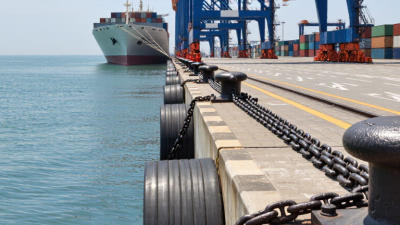
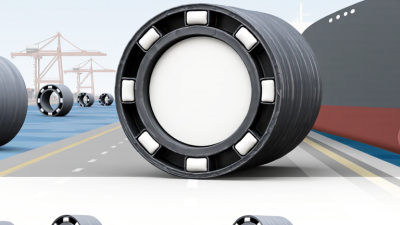
Cell rubber fenders are cylindrical marine cushions designed to absorb berthing energy. Their hollow body compresses axially when a vessel contacts the quay or supporting structure. This movement creates controlled reaction force, helping protect both surfaces during docking operations. In many standard designs, the rated working condition reaches approximately 50% deflection. The exact limit depends on diameter, rubber compound, temperature, and loading speed.

In practical installations, engineers check the fender’s energy absorption, reaction force, flange dimensions, and anchor loads. I have seen projects fail during review because the design considered only vessel size. Berthing angle, tide variation, hull shape, and uneven contact also matter.

Small details matter. A cell fender needs firm seating and correctly aligned bolts. Poor alignment can produce local stress, premature tearing, or uneven compression. The supporting panel should distribute pressure across the fender rather than concentrate it at one edge.

Reliable manufacturing requires controlled rubber mixing, proper reinforcement, accurate moulding, and traceable testing. Hardness, tensile strength, elongation, and compression performance should be verified against approved technical requirements.

A visual inspection is useful, but it cannot reveal every internal weakness. This is where I remain cautious: a neat surface does not always prove consistent quality.

Site measurements should also be compared with the original design assumptions, especially after unusual impacts or long service exposure. Temperature and aging may change performance more than expected.
Performance Metrics: Reaction Force, Energy Absorption, and 60° Shore A Rubber

When evaluating a cell rubber fender supplier, published performance data matters more than polished photographs. The key metrics are reaction force, energy absorption, and rubber hardness. A 60° Shore A rubber compound offers a practical balance between stiffness and resilience for many marine berths. It is not automatically the best choice.

Reaction force is the load transferred to the quay during compression. Lower force can protect older structures, but excessive deflection may reduce operating clearance. Energy absorption shows how much berthing energy the fender can dissipate safely. I would request complete test curves, not one isolated value. A credible supplier should state compression percentage, test speed, temperature, and tolerances. Without these details, comparisons become unreliable.

In practical inspections, installers should check flange alignment, bolt condition, and contact pressure. A small mounting error can create uneven loading across the rubber body. This may raise local stress and shorten service life. Hardness also changes with temperature, aging, and batch variation. Therefore, acceptance testing should verify 60° Shore A readings and dimensional accuracy. The honest limitation is that catalog figures cannot reproduce every vessel impact. Site conditions still decide whether the selected fender performs well.

China Best Cell Rubber Fender Manufacturer Supplier? - Performance Metrics: Reaction Force, Energy Absorption, and 60° Shore A Rubber

Indicative engineering comparison of molded cell rubber fenders using a nominal 60° Shore A rubber compound. Values are intended for preliminary selection and should be verified against the approved product drawing and test certificate.

Nominal Fender Size
(Outside Diameter × Height)
Nominal Rubber Hardness Recommended Design Deflection Reaction Force at Design Deflection Energy Absorption at Design Deflection Approx. Weight Typical Application Performance Status
400 × 200 mm 60 ± 5 Shore A 50% compression 90 kN 8 kN·m 65 kg Small berths, workboats, service pontoons Suitable
500 × 250 mm 60 ± 5 Shore A 50% compression 165 kN 19 kN·m 125 kg General-purpose quay protection Suitable
630 × 315 mm 60 ± 5 Shore A 50% compression 320 kN 51 kN·m 245 kg Medium commercial berths and terminals Suitable
800 × 400 mm 60 ± 5 Shore A 50% compression 690 kN 176 kN·m 510 kg Container, bulk cargo, and ferry terminals Suitable
1000 × 500 mm 60 ± 5 Shore A 50% compression 1,280 kN 460 kN·m 985 kg Heavy-duty ship-to-shore berthing systems Suitable
1200 × 600 mm 60 ± 5 Shore A 50% compression 2,180 kN 1,050 kN·m 1,700 kg Large vessels, oil terminals, and exposed ports Suitable
Technical notes: Reaction force and energy absorption are indicative nominal values for comparison at approximately 50% compression under standard laboratory conditions. Actual results vary with fender geometry, rubber formulation, temperature, loading speed, aging, and mounting arrangement. A 60° Shore A compound generally provides a balanced combination of load capacity, abrasion resistance, and energy absorption for marine fender applications. Final selection should consider vessel displacement, berthing velocity, berthing angle, eccentricity, hull pressure, tide range, and structural capacity.

Design Selection: Berthing Energy, Vessel Size, and PIANC Guidelines

Selecting a cell rubber fender begins with berthing energy, not the vessel’s name. PIANC MarCom Working Group 33 recommends evaluating vessel displacement, approach velocity, eccentricity, and berthing angle. These factors determine the energy transferred into the fender system. A larger vessel does not always create higher energy. Speed and operational conditions can change the result sharply.

Berthing energy should be calculated for normal and accidental conditions. PIANC guidance also considers the fender’s reaction force, deflection, friction, temperature, and rated performance. A cell fender may look suitable on paper, yet excessive reaction force can overload a quay wall. Designers should match the fender curve with hull pressure limits, especially near thin shell plating. Real projects need reliable vessel data, not rough estimates.

Vessel trends add pressure. UNCTAD’s Review of Maritime Transport 2023 reported a global commercial fleet exceeding 2.2 billion deadweight tons at the start of 2023. Larger ships and wider operating ranges make conservative selection more important. Still, conservative does not mean blindly oversized. Oversized fenders can reduce deflection and increase structural loads. Field measurements may also expose assumptions that calculations miss. That is uncomfortable, but useful. A final design should record the selected energy, tolerances, test conditions, and PIANC reference clearly.

Manufacturing Quality: ASTM D2000 Testing and Dimensional Tolerances

China Best Cell Rubber Fender Manufacturer Supplier?

A reliable cell rubber fender supplier should connect material testing with real production control. ASTM D2000 provides a useful framework for evaluating rubber compounds, including hardness, tensile strength, elongation, heat aging, and compression set. These tests help confirm whether the rubber remains resilient after repeated berthing loads, sunlight, and temperature changes.

Testing must be traceable. Each production batch should have identification, sampling records, calibrated instruments, and documented results. A technician may check hardness at several points, not just one convenient surface. That small detail matters. Uneven readings can reveal poor mixing, curing variation, or surface defects. Tensile specimens should also be prepared carefully, because cutting errors can distort the result.

Dimensional control is equally important. Inspectors should measure outside diameter, height, bolt-hole spacing, flange thickness, and mounting surfaces against approved drawings. Calipers, steel rules, and coordinate tools should be checked before inspection. Tolerances must match the project specification, rather than an unclear “standard size.” For example, a drawing may allow a limited deviation in diameter while requiring tighter bolt-hole positioning. The supplier should report actual measurements, not only pass-or-fail statements.

ASTM D2000 can support material verification, but it does not replace marine design calculations or installation checks. This distinction is often overlooked. A fender may pass laboratory tests yet perform poorly if compression, vessel energy, or mounting conditions are misunderstood. Experienced manufacturers should admit this limitation and review field feedback. Some production assumptions will be wrong. That is why corrective records and repeated inspection remain valuable.

Cell Rubber Fender Manufacturing Quality: ASTM D2000 Testing and Dimensional Tolerances

The chart shows the general dimensional tolerance limits for molded rubber products under ISO 3302-1 Grade M2 across nominal dimension ranges. ASTM D2000 is used to classify and specify rubber compounds through properties such as hardness, tensile strength, elongation, heat resistance, and compression set; the applicable acceptance values depend on the selected ASTM D2000 line callout and project specification.

China Supplier Evaluation: Factory QA, Type Tests, and Marine Support

Choosing China’s best cell rubber fender supplier requires more than comparing prices. A reliable evaluation begins inside the factory. Inspect rubber mixing records, steel insert traceability, mold condition, and curing controls. Ask for batch numbers linked to test reports. Samples should show even cell geometry, clean bonding, and no surface cracks. Measure dimensions yourself when possible. Photos can hide small defects. My own inspections have found that tidy workshops do not always guarantee consistent production. That is an uncomfortable, but useful, lesson. Evidence matters.

Type tests should match the fender’s intended marine duty. Request compression, energy absorption, reaction force, shear, and fatigue data where relevant. Check test temperature, deformation speed, sample size, and laboratory qualifications. A report without test conditions is weak evidence. Compare declared performance with the project design load, berthing speed, vessel size, and installation angle. Do not accept copied curves without verification. Independent retesting may add cost, yet it can prevent expensive replacement work. Some suppliers provide excellent samples but weaker production control. That gap deserves attention.

Tips: Ask for a factory audit before signing. Confirm spare parts, installation drawings, inspection points, and response times. Marine support should include practical guidance during delivery and fitting, not only sales messages. Clarify warranty limits, storage conditions, and replacement procedures in writing. Keep inspection records with photos and signed measurements. One detail is often missed: confirm the supplier can support your port after delivery. If communication becomes slow before purchase, service may not improve later.