Leave Your Message

How to Choose the Right Security Bollards?

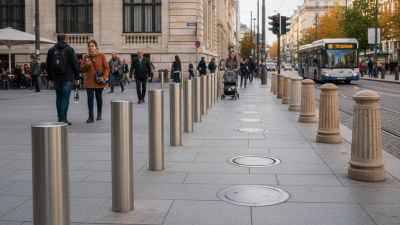
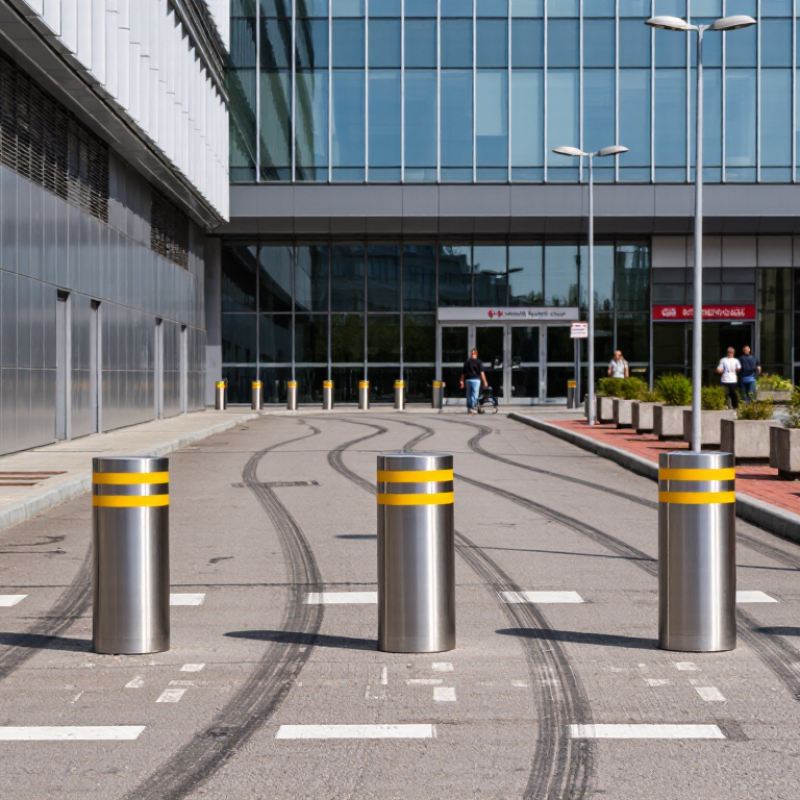
Choosing the right Security Bollards begins with understanding the site, not selecting the most impressive product. A busy hospital entrance needs different protection from a quiet office driveway. Observe vehicle paths, pedestrian movement, delivery schedules, and emergency access. Small details matter, such as a narrow turning radius or a frequently blocked service gate.

Security Bollards can control traffic, protect buildings, and separate vehicles from people. Their performance depends on more than steel thickness. Consider impact rating, foundation depth, spacing, visibility, corrosion resistance, and maintenance access. Fixed bollards may suit exposed façades, while removable or retractable models can support occasional vehicle access. Decorative designs may improve appearance, but they should never replace verified structural performance.

Look for manufacturers that provide clear test evidence, installation guidance, and material specifications. Experienced installers can identify weak ground conditions, drainage problems, and hidden utility lines before work begins. A sound assessment should also consider lighting and pedestrian sightlines. Even a strong bollard can become a hazard when poorly positioned.

There is no universal answer.

It is easy to overprotect a site. Too many barriers may restrict deliveries, reduce accessibility, or create confusing movement patterns. That trade-off deserves honest review. A polished specification can still fail when maintenance is ignored or installation differs from the approved design. Reliable selection combines practical experience, engineering knowledge, documented performance, and regular inspection. This guide explains how to compare those factors carefully, so your Security Bollards provide meaningful protection without compromising everyday site function.
How to Choose the Right Security Bollards?

Understanding Security Bollard Functions and Protection Levels

Choosing the right security bollard starts with its function, not its appearance.

A fixed bollard can stop a vehicle, while a retractable model can control access during changing site conditions. Removable units may suit emergency routes, but they depend on disciplined storage and installation. NPSA hostile vehicle mitigation guidance stresses layered protection, including distance, barriers, access control, and operational planning.

Protection levels must match a credible vehicle threat. ASTM F2656 testing includes an M50 classification, based on a 15,000-pound vehicle travelling at 50 miles per hour. The result also records vehicle penetration, such as P1, meaning one metre or less. That number matters.

A bollard with a strong impact rating may still fail if its foundation, spacing, or surrounding pavement is weak. Ratings are not interchangeable across every standard.

Look beyond the certificate.

Check soil conditions, drainage, installation depth, pedestrian clearance, and maintenance access. CISA vehicle-ramming mitigation guidance also supports combining physical barriers with site design and controlled vehicle movement.

On a real project, a visually heavy bollard can create poor sightlines near a doorway. That is an easy mistake. A practical assessment should map delivery vehicles, turning paths, emergency access, and likely approach speeds. Protection is not only about stopping impact; it is also about keeping people moving safely every day.
Assessing Site Risks, Traffic Patterns, and Security Requirements

How to Choose the Right Security Bollards?

Choosing security bollards starts with understanding the site, not selecting the strongest product. Walk the property during busy and quiet periods. Note delivery vans, emergency access, pedestrian crossings, loading zones, and blind corners. A bollard near a school entrance faces different risks from one beside a warehouse gate. Check the pavement, drainage, underground utilities, and available installation depth. These details often decide whether fixed, removable, or retractable bollards are suitable.

Traffic patterns matter as much as vehicle size. Record turning paths and peak arrival times. A large truck may need more clearance than expected. Measure twice. Review vehicle speeds, likely impact points, and the distance between barriers. Then match the required impact resistance, spacing, height, visibility, and maintenance access to the site risk. Consult qualified security or civil engineering professionals, and verify local accessibility and construction requirements. A technically strong barrier can still create unsafe pedestrian movement if positioned poorly.

Tips: Use temporary cones to test spacing before permanent work begins. Photograph morning and evening traffic conditions. Ask drivers where they struggle to turn. Include reflective surfaces or lighting where visibility changes at night. Inspect foundations after installation and schedule routine checks for loosened fixings, corrosion, or drainage problems. Early assessments can be incomplete. Revisit them after seasonal events, layout changes, or repeated near-misses.

Comparing Bollard Types, Materials, and Installation Methods

How to Choose the Right Security Bollards?

Choosing security bollards starts with the site, not the product catalogue. Walk the entrance during busy hours. Note turning vehicles, pedestrian routes, drainage, and underground services. A fixed bollard suits permanent protection around storefronts, loading areas, and building edges. Removable bollards work better where emergency or maintenance access is necessary. Flexible models can guide traffic, but they may not resist serious vehicle impact.

Material affects strength, appearance, maintenance, and cost. Galvanized steel handles demanding outdoor conditions and frequent contact. Stainless steel offers a cleaner finish, especially near public entrances. Concrete provides substantial mass, though repairs and visual integration can be difficult. Decorative sleeves may improve appearance, but they should not replace a tested structural core. That detail is often missed.

Installation is equally important. Surface-mounted bollards use a base plate and anchored fixings, making them practical on existing concrete. They need enough slab depth and sound reinforcement. Core-drilled or cast-in bollards usually provide deeper resistance, but they require accurate surveys and more disruption. Always check manufacturer test evidence, local engineering requirements, spacing, and vehicle approach speeds. An experienced installer should confirm substrate conditions before drilling. Do not guess.

There is no perfect option. A heavily rated bollard can create access problems or collect water around its base. A cheaper installation may look acceptable today, then loosen after repeated impacts. Review the site after installation and adjust the plan when real use reveals weaknesses.

Selecting the Proper Height, Spacing, and Impact Rating

How to Choose the Right Security Bollards?

Selecting the Proper Height, Spacing, and Impact Rating

Security bollards work best when their dimensions match the site’s actual risks. Start with a practical assessment of entrances, walkways, loading areas, and emergency access routes. Measure vehicle widths carefully, including mirrors and turning angles. Height affects visibility, deterrence, and pedestrian protection. Taller units may resist climbing attempts, but they can block sightlines near doors or crossings. Keep visibility clear.

Spacing should prevent vehicles from passing through while allowing people, carts, wheelchairs, and maintenance equipment to move comfortably. Many designs use narrow gaps, but every site needs its own measurements. Check the largest expected vehicle and the smallest vulnerable opening. A neat layout can still fail. I have seen drawings overlook door swings and drainage channels.

Impact rating requires more than choosing the strongest available model. Consider vehicle weight, approach speed, direction, and stopping distance. A tested rating gives useful evidence, but installation matters equally. Weak foundations can reduce performance dramatically. Select products supported by independent testing and clear technical documentation. Confirm the rating matches the intended threat scenario, not just a general classification.

Use reinforced foundations designed for local ground conditions and expected loads. Review concrete depth, underground services, and surface levels with a qualified installer. If the risk assessment is uncertain, record the assumptions and revisit them. Conditions change. Reliable protection depends on accurate measurements, verified testing, and installation that follows the approved design.

How to Choose the Right Security Bollards? — Selecting the Proper Height, Spacing, and Impact Rating
Dimensions are typical planning ranges. Final selection should be based on a site-specific risk assessment, structural design, underground utilities, vehicle approach speed, and independently verified test documentation.
Protection Level Typical Application Recommended Exposed Height Typical Bollard Outside Diameter Recommended Clear Spacing Impact Rating Guidance Installation and Design Notes
Low Pedestrian areas, storefronts, parking guidance, and protection from accidental low-speed contact. 750–900 mm
(29.5–35.4 in)
100–168 mm
(4–6.6 in)
1,200–1,500 mm
(47–59 in)
Usually non-rated or intended for low-speed accidental contact. Do not treat decorative or light-duty products as vehicle-attack barriers. Use a spacing that discourages vehicle passage while maintaining accessible pedestrian routes. Confirm visibility requirements with the site designer.
Moderate Building entrances, loading-zone edges, public sidewalks, schools, and commercial properties exposed to deliberate vehicle intrusion risks. 900–1,100 mm
(35.4–43.3 in)
168–219 mm
(6.6–8.6 in)
1,200–1,500 mm
(47–59 in)
Consider independently tested low- to medium-speed vehicle impact protection. A stated test speed alone is not sufficient; review vehicle mass, penetration, test layout, and foundation details. Provide a reinforced concrete foundation designed for the selected product and soil conditions. Protect corners and vehicle approach lanes where turning movements are possible.
High Government facilities, critical infrastructure, high-value premises, airports, data centers, and sites with a documented hostile-vehicle risk. 900–1,200 mm
(35.4–47.2 in)
219–273 mm
(8.6–10.7 in)
1,200–1,500 mm
(47–59 in)
Specify a recognized vehicle-mitigation test classification, such as ASTM F2656 or an equivalent national or international standard, with the required vehicle mass, impact speed, and penetration rating. Use certified assemblies rather than relying only on steel thickness. The bollard, foundation, reinforcement, anchors, soil, and adjacent pavement must work as one engineered system.
Very High Perimeters and controlled approaches requiring resistance to heavy vehicles travelling at significant speed. 900–1,200 mm
(35.4–47.2 in)
273–355 mm
(10.7–14 in)
1,200–1,500 mm
(47–59 in)
Specify a project-required ASTM F2656 or equivalent rating, including the exact vehicle class, impact speed, and allowable penetration. Higher speed and heavier vehicle combinations require substantially stronger systems. Use a qualified security engineer for layout and foundation design. Consider hostile-vehicle paths, stand-off distance, gates, emergency access, drainage, utilities, and maintenance access.
Selection rules: Keep the clear gap small enough to prevent the design vehicle from passing between bollards, but verify the layout against local accessibility requirements. For certified vehicle-attack protection, compare the complete tested configuration—not just the bollard diameter or material. Impact classifications are not interchangeable unless the test standard, vehicle mass, speed, penetration limit, and installation conditions are equivalent.

Checking Standards, Maintenance Needs, and Long-Term Costs

Choosing security bollards starts with the site, not the catalogue. Identify vehicle approach speeds, pavement strength, pedestrian routes, and emergency access. Then check applicable standards with a qualified security engineer. ASTM F2656, IWA 14-1, and PAS 68 use different test methods. Their ratings are not automatically interchangeable. Ask for dated test evidence, installation limits, and soil assumptions. This step prevents a certified product from failing in an unsuitable foundation.

Maintenance needs are often underestimated. Inspect welds, reflective surfaces, anchor bolts, drainage, and impact damage at scheduled intervals. Hinged or removable units need extra attention around locks and lifting points. Record photographs after inspections. Small corrosion spots are easier to repair than swollen steel bases. I have seen sites delay repairs because the bollards still looked upright. That judgment can be misleading. Include cleaning products, spare parts, access equipment, and labor in the maintenance plan.

Compare lifetime cost, not purchase price. Include excavation, concrete, traffic management, inspections, energy, repainting, and collision replacement. Automatic systems may require power, controls, backup release, and trained technicians. Ask how quickly parts can be sourced. A low-cost unit can become expensive when one damaged mechanism blocks an entrance. Review warranty exclusions carefully, especially for coastal exposure and accidental impact. Leave room for uncertainty. Real sites change, and budgets rarely include every repair. Choose a design that can be inspected without closing the whole route.